
Bodycote Gains ISO-validated Carbon Tools for Key Heat Treatment Processes
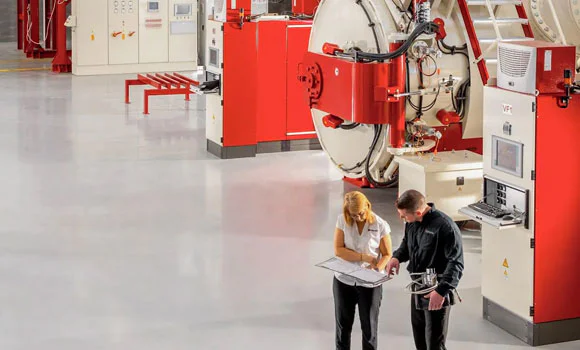
Bodycote’s validated PCF calculators cover nine key heat treatment processes (Courtesy Bodycote)
Bodycote plc, headquartered in Macclesfield, UK, has achieved independent validation by Bureau Veritas for its proprietary product carbon footprint (PCF) calculators across nine core processes, which represent approximately 80% of the group’s revenues.
Customers can now request carbon footprint data for the heat treatment of their products using a Bureau Veritas-validated calculator, with confidence that both the methodology and tool have been independently assured, and the calculations follow recognised best practice.
This data will enable customers to:
Measure and report product carbon footprints with confidence
Compare the carbon performance of different thermal-processing routes
Select lower-carbon options such as vacuum processing or low-pressure carburising (LPC)
The validation was performed by Bureau Veritas, a provider of environmental verification services, in accordance with ISO 14064, the internationally recognised standard for greenhouse gas accounting, validation, and verification.
“Validating our product carbon footprint tools through Bureau Veritas reflects Bodycote’s commitment to scientific integrity and leadership in sustainable manufacturing,” said Jim Fairbairn, Chief Executive Officer of Bodycote. “By providing robust, credible carbon data at the product level, Bodycote is helping manufacturers accelerate their journey to net-zero while also advancing our own strategic priorities — to optimise operations, perform efficiently, and grow revenues in lower-carbon service lines.”
Lily Heinemann, Chief Sustainability Officer at Bodycote, shared, “This initiative is a cornerstone of Bodycote’s sustainability and commercial strategy. The validated calculators represent a major step forward for a sector that has historically faced challenges in quantifying process-level emissions due to the technical complexity of thermal processing.”
“Sustainability and corporate strategy go hand in hand,” added Heinemann. “As we expand our low-carbon process portfolio, validated carbon measurement becomes a powerful enabler for both.”