
Designing Advanced Catheters with Metallization Technologies
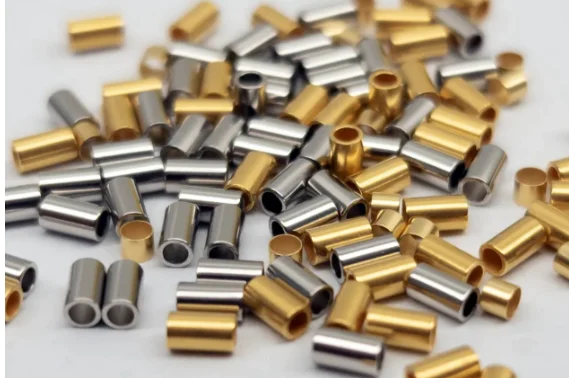
Catheter marker bands made from gold and platinum.PROPLATE
At a Glance
Demand for minimally invasive procedures is driving the need for highly functional and easy-to-use catheters.
Metallization techniques like electroplating can be used to apply gold or platinum directly to catheters.
Vacuum deposition can be used to add conductive elements for sensors or energy-based treatments.
Catheter design has come a long way thanks to advancements in metallization techniques that enhance functionality, durability, and imaging. Traditional methods like machining, drawing tubes, and swaging have been widely used for years, but newer approaches—such as electroplating and other metal coating solutions—offer more flexibility and precision. This article explores how these technologies are shaping the future of catheter design, helping manufacturers incorporate advanced features without increasing size or reducing flexibility. We’ll look at how these techniques have developed, their impact on catheter performance, and where they’re headed next.
Enhancing catheter design through metallization
Medical devices are becoming smaller and more advanced, and catheters are no exception. These essential tools are used in a wide range of diagnostic and therapeutic procedures, so they need to be both highly functional and easy to use for navigating tortuous anatomies. To keep up with the growing demands of minimally invasive procedures, manufacturers are always trying to find new ways to integrate key features like radiopaque markers and electrodes. While traditional manufacturing techniques have been the standard for years, metallization technologies reveal new possibilities for customization and efficiency.
Not only can engineers enhance key features like enhancing imaging and improving sensor integration by selectively applying metals to specific areas of a catheter component using electroplating and other metallization techniques, but they can also reduce production costs. As these technologies continue to advance, they offer medical device designers more options for refining catheter performance while meeting strict clinical and regulatory requirements.
Advancements in metallization technologies
New metallization techniques are making it easier to add critical features to catheters without sacrificing flexibility or performance. Two major innovations in this area include:
Electroplated radiopaque markers. Radiopaque markers have traditionally been made by machining or drawing tubes, then swaging, crimping, or welding to the assembly. Electroplating offers an alternative by allowing radiopaque coatings such as gold (Au) or platinum (Pt) to be applied directly to the catheter surface. This approach enhances fluoroscopic visibility and maintains component flexibility, while offering a lower dimensional profile.
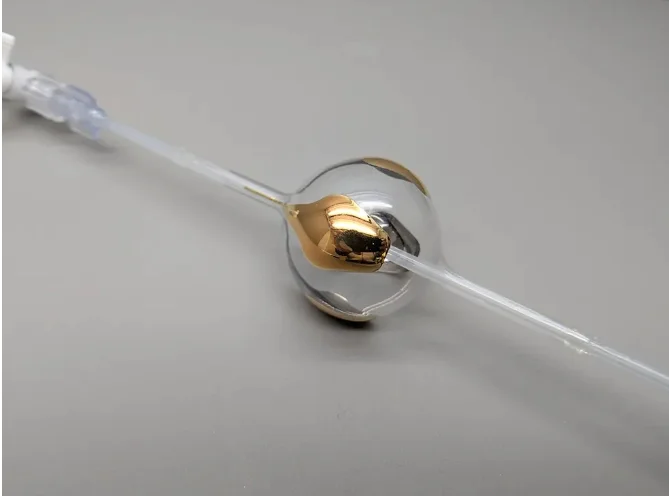
Balloon metallization. Balloon catheters have historically relied on adhesive and bonding techniques for electrical circuit integration. Advanced metallization solutions through vacuum deposition processes allow metal to be selectively applied to balloon surfaces without compromising flexibility and with superior adhesion to mechanically bonded circuitry. This technique is especially useful for adding conductive elements for sensors or energy-based treatments such as pulsed-field ablation.
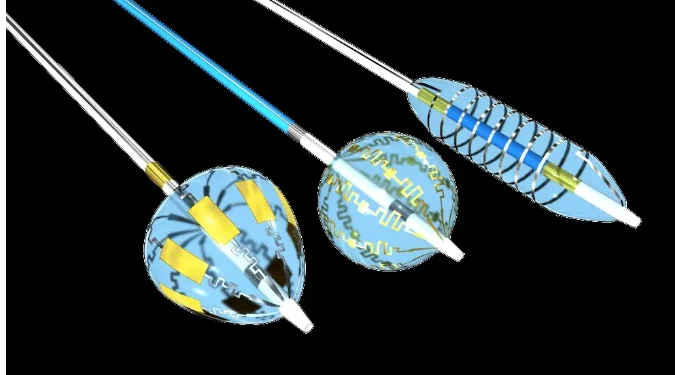
Balloons metallized in gold. PROPLATE
Why metallization matters in catheter design
Metallization techniques offer several advantages that make catheters more effective and easier to manufacture. Consider the following benefits:
Tailored visibility. Electroplated radiopaque markers allow for Pt and Au thickness customization to enhance visibility under fluoroscopy, helping clinicians position catheters with greater accuracy.
Seamless sensor integration. Metal coatings allow sensors to be atomically bonded directly onto catheter components, imparting robust adhesion compared to mechanical bonds.
Smaller, more-efficient devices. Advanced metallization techniques allow catheters to incorporate high-tech features while minimizing profile growth compared with traditional means, preserving maneuverability and patient comfort.
More-efficient manufacturing. These methods simplify production and reduce precious materials consumed, potentially lowering costs and making it easier to scale manufacturing for different catheter designs.
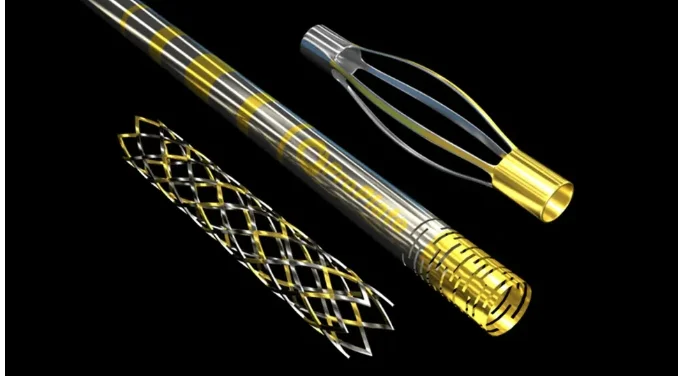
Vizi-Band radiopaque marking. PROPLATE
Where metallization technologies are being used
Metallization techniques are helping improve catheter-based devices across multiple end markets, including:
Neurovascular. Stent retrievers, aneurysm coils, aspiration catheters, and guidewires.
Electrophysiology. Ablation catheters, diagnostic mapping catheters, and transeptal access catheters.
Structural heart. TAVR and TMVR delivery systems, embolic protection devices, and guidewires.
Peripheral vascular. Atherectomy devices, thrombectomy systems, and chronic total occlusion (CTO) catheters.
Heart failure management. Left ventricular assist devices (LVADs), percutaneous ventricular assist devices (pVADs), and acute heart failure treatment devices.
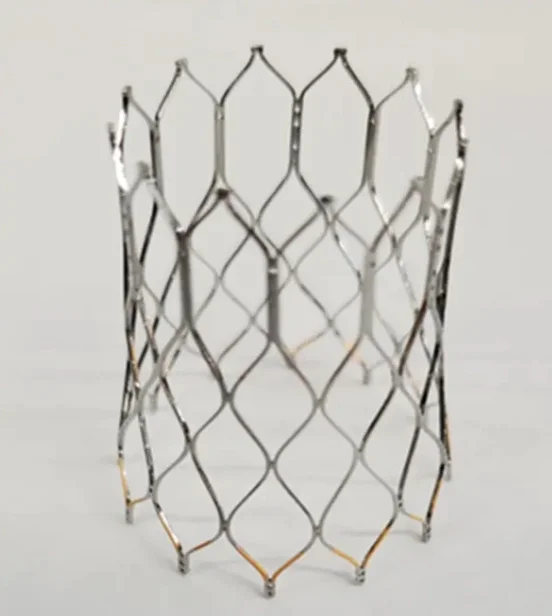
A stent frame. PROPLATE
Performance & testing
To ensure these technologies meet real-world demands, extensive testing is being conducted on metallized catheter components. These tests focus on material compatibility, durability, electrical conductivity, and radiopacity to confirm that they meet the high standards required for medical devices. Testing protocols include biocompatibility assessments and fluoroscopic imaging to ensure component durability and performance. As the technology evolves, ongoing testing will help refine its applications and effectiveness.
Meta-Poly plating that atomically bonds metal directly to polymer. PROPLATE
What’s next in metallization?
Research into advanced metallization continues to push the boundaries of catheter design. Current efforts focus on testing for perceived risks, such as galvanic corrosion and hydrogen embrittlement, to ensure long-term reliability and safety. The goal is to make catheter components even more durable and versatile while maintaining the flexibility for minimally invasive procedures. Future advancements in selective metallization may provide even greater control over electrode placement and conductivity, making catheters even more precise and effective for a broader range of applications.
As the medical industry prioritizes minimally invasive procedures, metallization technologies are playing a key role in driving innovation. Regulatory focus on biostability and traceability is also pushing the need for precise and trackable coating technologies, such as in-situ marker integration or traceable lot-level plating records. As catheter-based therapies become increasingly sophisticated, metallization technologies will continue to play a role in balancing innovation with manufacturability and patient safety.
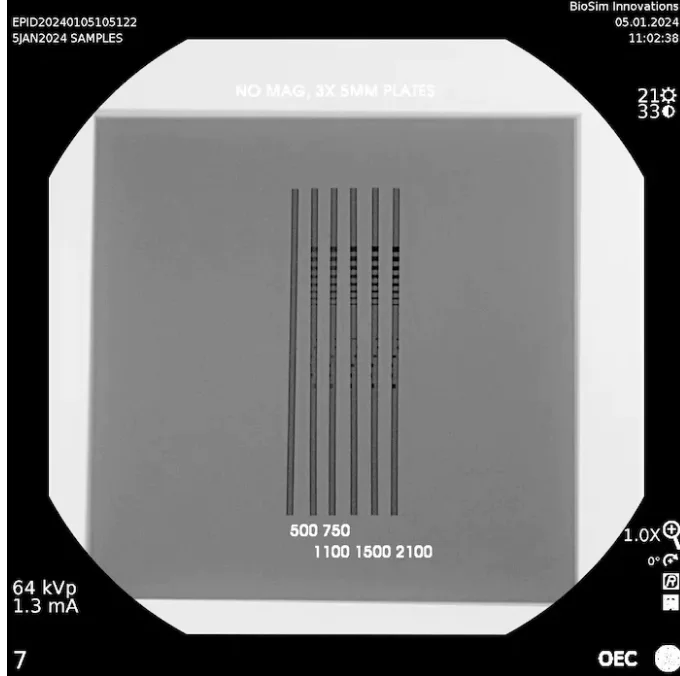
Fluoroscopy image showing six stainless-steel hypotubes under three 5-mm-thick aluminum plates. One hypotube is uncoated stainless steel, while the others feature gold bands with increasing thicknesses of 500, 750, 1,100, 1,500, and 2,100 microinches—demonstrating the correlation between gold thickness and radiopacity. PROPLATE